From Hustle to Wealth: Mastering Money for Your Micro-Business
For micro-entrepreneurs in Ghana, the journey from daily hustle to sustainable wealth often hits a roadblock: money management. You might be generating good sales, but are you truly profiting? Are you investing in your future? At Africa Street MBA, we know that successful business owners don’t just work hard; they master their money.
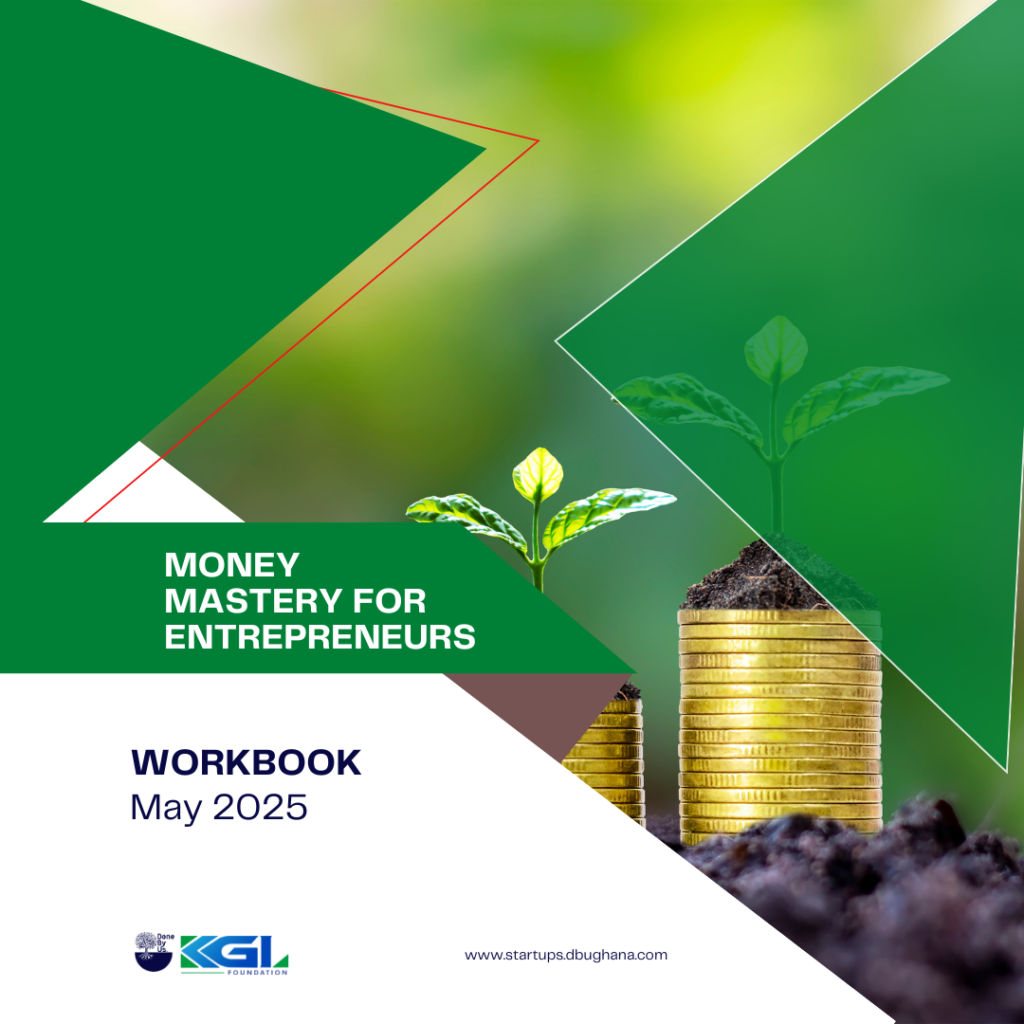
The “Money Mastery for Entrepreneurs” workbook is your practical guide to taking control of your finances, ensuring you understand where your money goes, and preparing your business for growth and stability. It’s about building a financial foundation that can withstand market pressures and support your future vision.
The Four Pillars of Money Mastery
The workbook breaks down financial control into four core sections, moving you from confusion to clarity:
1. The Mindset Shift: Treating Business Money as Business Money 🧠
Many micro-entrepreneurs mix personal and business funds, which makes it impossible to know if the business is truly profitable. The first step in mastery is establishing boundaries and adopting a professional mindset.
- Separate Your Wallets: This is the most crucial step. Learn how to draw a fair, regular wage for yourself, treating it as a cost, while leaving the remaining profit in the business for growth and expenses.
- Know Your ‘Why’: Why do you need this money? Knowing your goals—whether it’s funding your children’s education or expanding your inventory—will keep you motivated and disciplined.
2. Tracking: Knowing Where Every Cedi Goes 📝
If you can’t track it, you can’t manage it. This is where basic bookkeeping comes in—it doesn’t have to be complicated.
- Sales vs. Profit: Your Sales Revenue (money in) is not the same as your Profit (what you keep). You must subtract the Cost of Goods Sold (COGS) and Operating Expenses to find your true profitability.
- Simple Record Keeping: Learn simple methods, such as using an exercise book or basic spreadsheets, to track daily income and expenses. This prevents leaks and highlights potential waste.
3. Pricing and Costing: Setting Prices for Real Profit 🏷️
Are you setting your prices based on competitor rates, or are you covering all your costs and ensuring a profit margin?
- The Full Cost Calculation: Learn to calculate the true cost of your product or service. Many forget to include hidden costs like transport, utilities, packaging, and the value of their own time.
- Price Strategically: Once you know your full cost, you can set a price that guarantees a profit, giving you confidence when dealing with customers.
4. Stability and Growth: Planning for the Future 📈
A master of money doesn’t just manage today’s cash; they prepare for tomorrow’s opportunities and challenges.
- The Emergency Fund: Set aside money regularly to handle unexpected issues like illness, equipment failure, or a sudden change in the market.
- Investment for Growth: Identify funds that can be used to invest in profit-generating areas, such as purchasing better equipment, buying bulk inventory for a discount, or expanding your market reach.
- Managing Debt: Understand the difference between good debt (investing in a profitable asset) and bad debt(borrowing for unnecessary consumption) and learn how to manage loans responsibly.
Ready to Take Financial Control?
Money mastery isn’t just for accountants; it’s for every entrepreneur serious about building a lasting legacy.
Download the full workbook, “Money Mastery for Entrepreneurs,” to access practical tools, exercises, and action plans to transform your financial habits today.
⚠️ Disclaimer
This workbook is provided for informational and educational purposes only, as a guide to applying Design Thinking principles to micro-business development in Ghana. Success in business requires commitment, market knowledge, and adaptation beyond the concepts presented herein. The authors and organizations involved, including DONE BY US and KGL Foundation, assume no responsibility for any decisions made or results obtained based on the use of this material.