Fuelling Your Future: Turning Your Passion into a Profitable Business
Do you have a deep passion—maybe you love cooking, have a knack for design, or enjoy helping your community? At Africa Street MBA, we believe that your passion is a powerful fuel for the most successful businesses. But how do you transform that personal interest or hobby into a sustainable business that not only brings you joy but also provides a living?
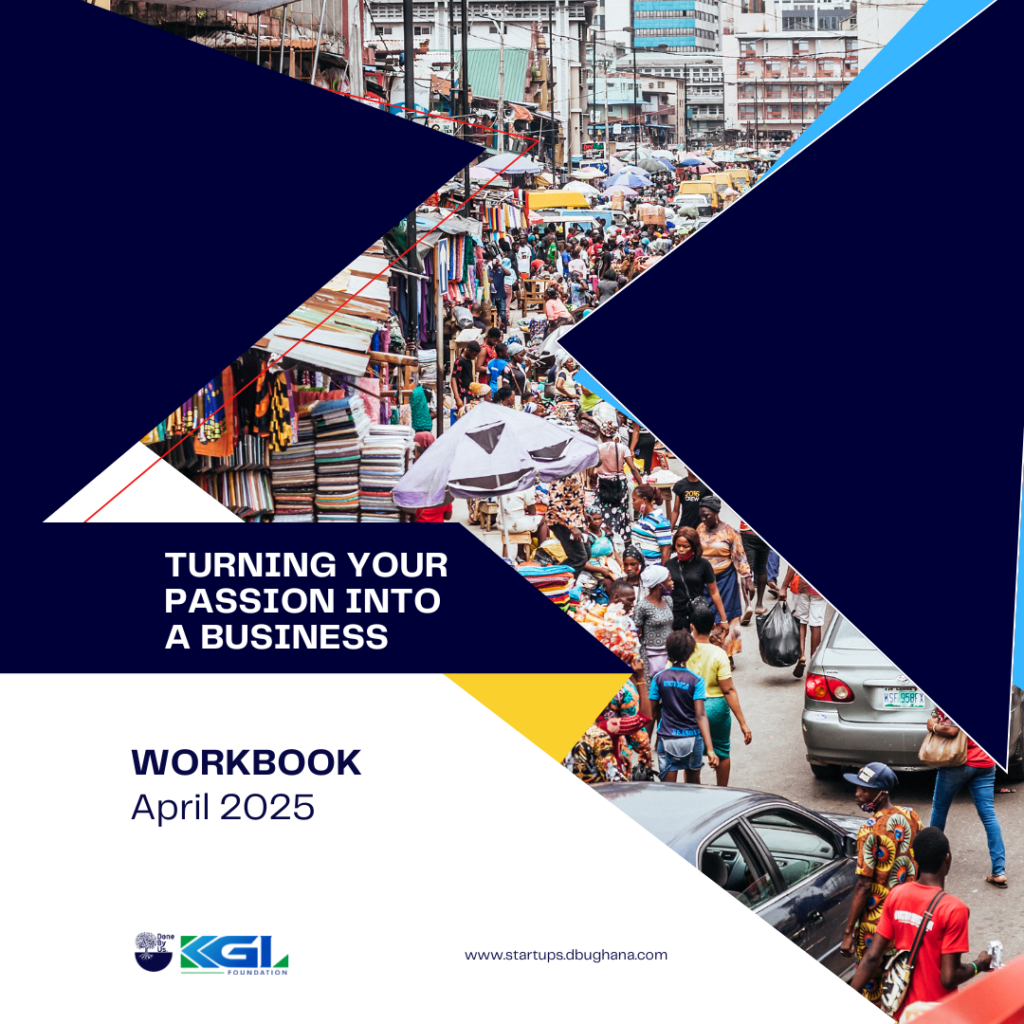
This workbook, “Turning Your Passion Into A Business,” guides you through a strategic journey to build a viable business around what you love. It’s about more than just dreams—it’s about making your passion pay.
5️⃣ Simple Steps to Passion-Driven Success
The workbook outlines five actionable steps to help micro-entrepreneurs turn their unique interests into market opportunities:
1. Discover: Uncover Your True Passions and Unique Strengths 🧭
This is the foundation. You need to deeply understand what truly ignites your spirit and what unique talents you possess.
- The Power of Passion: Your passion will be your greatest motivator during challenging times.
- Talent Inventory: Identify what activities make you lose track of time, what you naturally excel at, and what people always ask you for help with. Kwame, for example, realized his strengths in woodcraft weren’t just carving, but also his patience and attention to detail. This helps you identify the unique value you can offer others.
2. Align: Connecting Your Passion to Real-World Needs 🤝
A business needs customers, so this step helps bridge the gap between what you love and what problems people need solved.
- Market Matchmaking: Brainstorm potential problems you could solve using your passion/skill, finding where your interest intersects with a customer’s frustration or desire.
- Focus on the Pain: Identify your “Dream Customer’s” specific pain point that your passion can address. Adwoa, a Maths lover, aligned her passion for teaching with the community need of parents who were too busy to help their children with homework. This transforms your hobby into a valuable product or service.
3. Innovate: Brainstorming How Your Passion Can Solve Problems 💡
With a clear customer and their pain point, it’s time to generate diverse solutions, using your passion as the core.
- Creative Delivery: This step encourages you to find innovative angles that leverage your unique strengths. For example, a passion for cooking traditional food could be delivered as a weekly meal subscription service, frozen portioned stews, or even quick online cooking classes.
- The Pivot Exercise: Consider adapting your passion to serve a slightly different customer or deliver the solution in a new way. Kofi combined his passion for design with an overlooked resource—discarded wood scraps—to create affordable, upcycled furniture.
4. Structure: Creating a Basic Framework 🏗️
Move from idea to an actionable plan by building a simple structure for how your business will operate and sustain itself. This is a practical sketch, not a full business plan.
- Value Proposition: Clearly state your core promise to the customer. For a busy mother in Accra, the promise might be: “We help busy working mothers in Accra to feed their families healthy, traditional meals by delivering pre-cooked, nutritious, and delicious Ghanaian dishes weekly, saving them time and effort”.
- Business Model Snapshot: Map out the high-level workings:
- Key Customers: Who will pay for your solution?
- Value Proposition: Your core promise.
- Channels: How will customers find you and how will you deliver (e.g., WhatsApp, referrals, direct delivery)?
- Revenue Streams: How will you make money (e.g., subscription, per item sale, mobile money)?
- Main Costs: What do you need to spend money on (e.g., ingredients, packaging, fuel)?
5. Launch: Taking the First Practical Steps 🚀
Overcome the fear of starting by taking low-risk action. You need a start to make the plan perfect.
- The Micro-Launch: Determine the absolute smallest, quickest way you can offer your passion-driven solution to a few real customers—your Minimum Viable Product (MVP).
- Test & Learn: Offer your MVP, gather feedback, and be willing to adjust. Papa Kwesi, the phone repair enthusiast, started by printing flyers and offering services from home to build trust and refine his process before considering a physical shop.
Your passion isn’t just a personal joy; it’s a powerful asset for building a meaningful and successful business.
Click here to download the workbook.
⚠️ Disclaimer
This workbook is provided for informational and educational purposes only, as a guide to applying Design Thinking principles to micro-business development in Ghana. Success in business requires commitment, market knowledge, and adaptation beyond the concepts presented herein. The authors and organizations involved, including DONE BY US and KGL Foundation, assume no responsibility for any decisions made or results obtained based on the use of this material.